
Blog
Why vocational learning matters
Oct 06, 26
Oct 06, 26
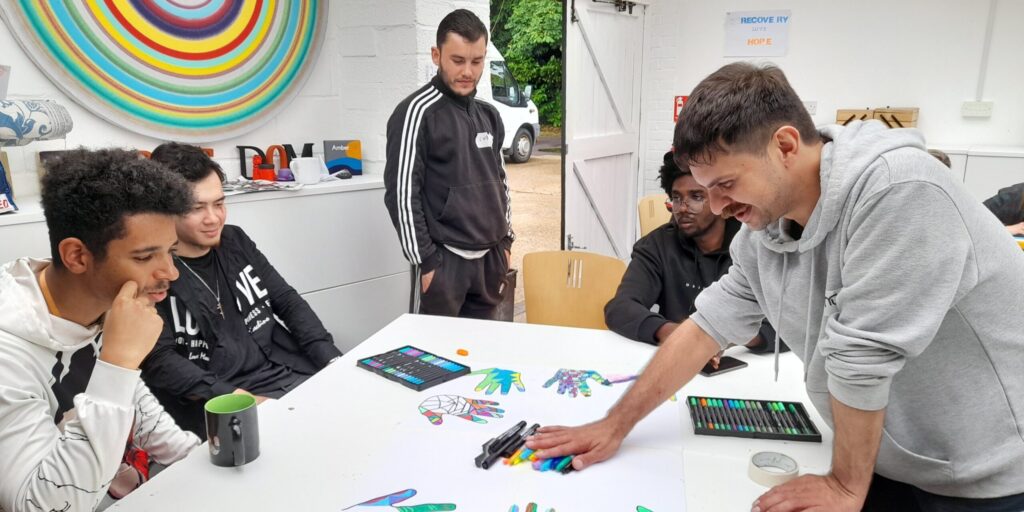
In this blog Becci and Alexandra, researchers from the Institute for Employment Studies, discuss the value of vocational learning in supporting young people to achieve good work, and present timely high-quality evidence on what works to engage young people who are not in education, employment or training (NEET) in vocational programmes.
Vocational learning and training is undergoing a period of change in England, with recent government announcements proposing the development of routes to support progression into employment, apprenticeships and further study. This includes the planned introduction of vocational GCSEs, and V Levels, and the ambition to give mayors funding, powers and accountability to create routes to work for young people.
The focus on strong vocational pathways, creating smoother school-to-work transitions and place-based approaches are welcome developments for addressing youth unemployment and disengagement and aligns with what we know works based on existing international evidence.
Youth Future’s updated Youth Employment Toolkit shows that vocational learning and training can play an important role in helping young people stay engaged in education, gain valuable skills and progress into employment and further study.
The updated Toolkit covers new evidence from a component network meta-analysis, which indicates that job-specific technical and vocational skills training, delivered in off-job settings as part of an active labour market programme, is likely to have a positive impact on a range of outcomes for young people aged 16 to 24 by:
This shows that vocational learning, as part of a youth employment programme, is about more than preparing for a first job. It can foster young people’s continued learning journey, building skills and creating pathways into employment.
For young people 16 to 19 not thriving in academic studies, vocational learning can offer an important alternative, providing the labour market link that helps them access the benefits of continued learning.
These young people are more likely to choose vocational pathways, often in further education colleges.
But – as research funded by Nuffield Foundation and a recent Department for Education report both find – they are also more likely to face wider social and economic disadvantages that can compound to make the transition from school to vocational training more challenging and reduce engagement and progression.
Typically, to study vocational qualifications, young people must leave school and transition to unfamiliar settings and institutions. They may also face longer, unfamiliar travel distances that incur higher costs. This compounds complex disadvantages uncovered by multiple studies funded by Youth Futures including mental health, emotional wellbeing, systemic racism, support needs and SEND, home contexts, and affordability and access as barriers.
The Institute for Employment Studies’ evaluation of the Careers & Enterprise Company’s Effective Transitions Fund highlights that without full transition support to make the right course choices and overcome barriers, young people’s ability to thrive within their chosen vocational pathway may be reduced.
The updated Toolkit highlights the potential of job-specific vocational training to improve young people’s earning and learning outcomes. Realising these benefits at scale requires strong local systems that connect training, employer demand and progression opportunities.
Young people need access to clear information about the options available to them. Employers need confidence in technical and vocational qualifications. However, significant instability and policy ‘churn’ in the provision of technical and vocational qualifications has also contributed to employers and young people struggling to engage with these pathways.
Institute for Employment Studies’ The Big Conversation project found that many employers are not familiar with the range of technical and vocational pathways available in England, highlighting the importance of strengthening connections between employers, education and the wider skills system.
Similarly, Fabian Society’s Pathways to Apprenticeships reported that just a quarter (24 per cent) of employers have a good knowledge of T-levels, and only 16 per cent have a good knowledge of planned V-levels.
In addition, different local economies have different skills needs and employment opportunities. Local Skills Improvement Plans aim to bring employers, providers and partners together to identify skills priorities and shape training provision. By aligning learning opportunities with local labour market demand, place-based approaches can create clearer routes into good-quality jobs.
The existing evidence also reminds us that vocational learning is not a one-size-fits-all solution. Research from the Centre for Vocational Education Research (CVER) shows that returns vary depending on a young person’s alternatives. Higher-level technical qualifications, particularly in STEM subjects, can generate strong economic returns.
For some young people who might otherwise leave education altogether, vocational routes can improve employment prospects and future earnings. The key is ensuring that young people can access high-quality pathways matched to their skills and aspirations.
To learn more about what works to improve young people’s outcomes, explore the updated Youth Employment Toolkit. It offers valuable insights for policymakers, funders, and employers working to create better pathways into education, skills and work.
As part of our What Works Programme, we are generating high-quality, causal evidence about the impact pre-employment vocational training has on education, employment and training outcomes of marginalised young people in the UK by conducting a randomised controlled trial (RCT) of an existing support programme in England delivered by Cornwall Council through multiple local partners.