News, Policy hub
Number of young people not earning or learning rises to over one million as interim Young People and Work report sets out need for urgent action
May 28, 26
May 28, 26

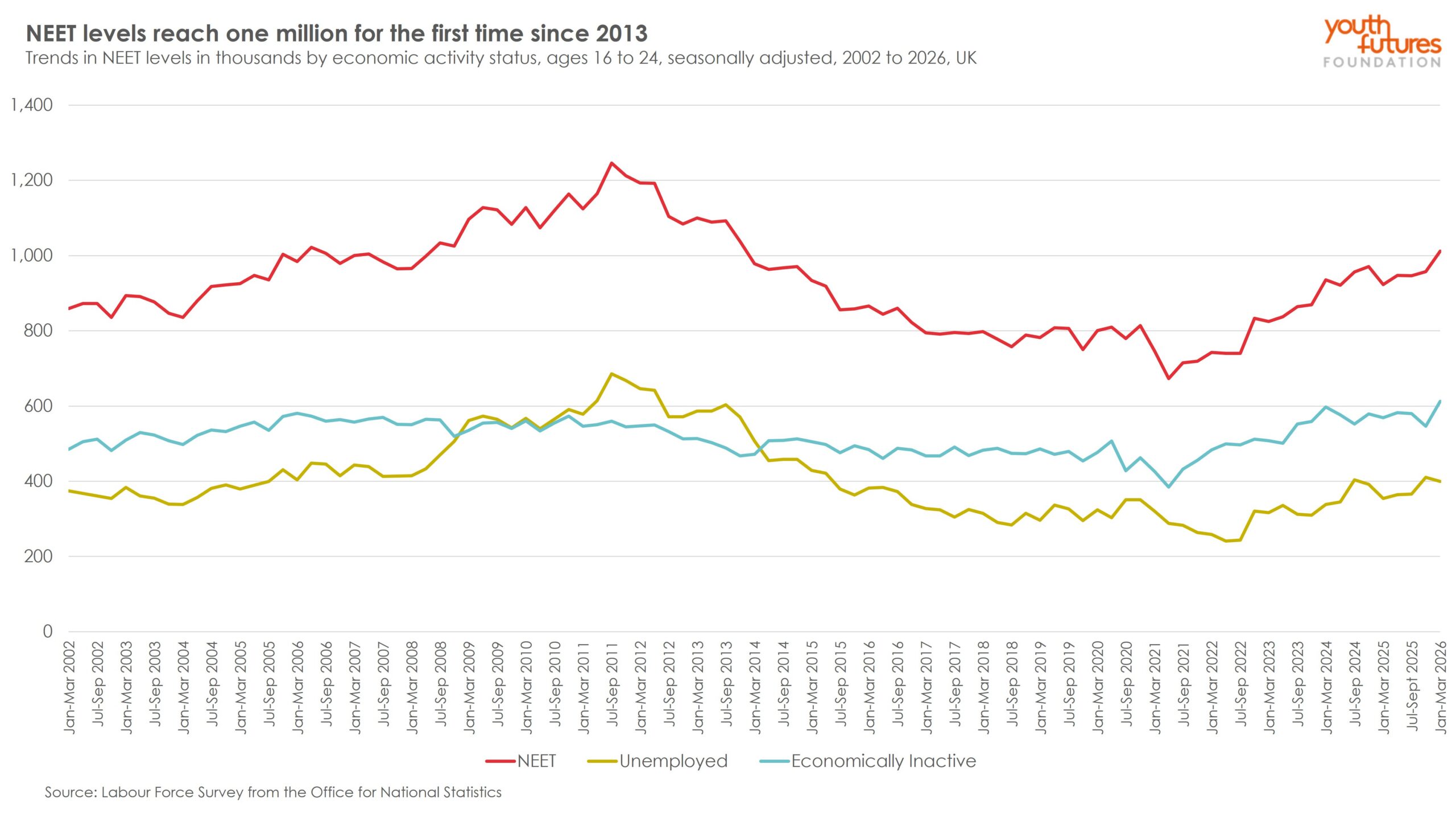
The Office for National Statistics (ONS) has reported that around 1,012,000 young people were not in education, employment or training (NEET) in the first quarter of 2026. This is the highest since 2013.
The rise points to a worsening outlook for young people with more being locked out of opportunities to earn or learn.
It comes as the interim Young People and Work report, published later today, is expected to set out the full scale and complexity of the challenge, alongside the structural factors that require urgent action if we are to turn the tide.
“Today’s ONS figures reveal that around 1,012,000 young people are not in education, employment or training (NEET). Taken alongside the findings in Alan Milburn’s diagnostic report, the message is clear; we must act decisively and at pace for young people.
"Growing government focus through the expanded Youth Guarantee and recent apprenticeship reforms have marked a welcome and positive start, but the scale and complexity of the challenge means we need to raise ambition further. Ambitious system reform needs to include acting early in education, working with employers to create more apprenticeship opportunities which we know have high evidence of impact, combined with tailored employment support for young people facing more barriers, like those with SEND or care experience.
"With mental ill health a significant driver of rising inactivity, reforms must also integrate employment and health support in ways that reflect the evidence. We also need to do more to reach ‘hidden’ NEET young people. Approaches that integrate relational support through trusted adults have the potential to provide the connective tissue needed in the system.
"Alongside the evidence, the lived experience of young people is essential to shaping solutions that work. Behind the statistics are real young people facing real and often multiple barriers. We have been pleased to convene the Youth Advisory Panel to help ensure their voices inform the interim report.
"The opportunity is here to drive meaningful change. We have a moral obligation to improve outcomes for young people and additionally there is a huge societal and economic prize if we get this right. Analysis suggests that matching youth participation rates in the Netherlands would mean 567,000 more young people earning or learning, delivering an £86 billion boost to the UK economy.
"As the What Works Centre for Youth Employment, we look forward to supporting the next phase of the review to develop recommendations grounded in what works.”
Sarah Yong, Deputy CEO at Youth Futures Foundation